

10 Things Everyone Has To Say About German Driving License German Driv…
페이지 정보
본문
Understanding the German Driving License: A Comprehensive Guide
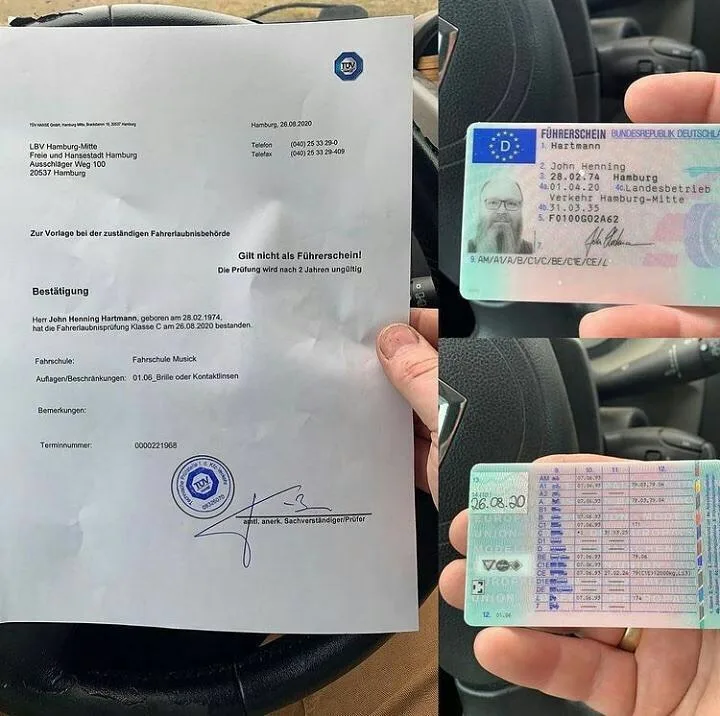
When it comes to driving in Germany, understanding the policies surrounding the German driving license (führerschein kaufen legal (Www.alonzosokolsky.Top)) is crucial for both homeowners and visitors. The process of getting a driving license in Germany is extensive and managed, ensuring that all motorists fulfill security and skills standards. This post will supply an in-depth overview of the kinds of German driving licenses, the application procedure, requirements, and often asked questions.
Kinds Of German Driving Licenses
The German driving license is classified into different classes based on the type of automobile that may be driven. Below is a summary of the most typical classes:
| License Class | Car Type | Minimum Age | Description |
|---|---|---|---|
| A | Bikes | 24 or 21 * | Full access to all motorcycle types. |
| A1 | Light motorbikes (approximately 125cc) | 16 | Minimal access to smaller sized motorcycles. |
| B | Cars, vans, and light trucks (as much as 3.5 loads) | 18 | Standard driving license for personal vehicles. |
| B96 | Combination of a lorry and trailer (as much as 4.25 loads) | 18 | Additional authority for bigger vehicle combinations. |
| C | Trucks over 3.5 heaps | 21 | Required for commercial driving. |
| D | Buses | 24 | Needed for mass transit services. |
| BE | Vehicles with trailers (over 750 kg) | 18 | Permits pulling heavier trailers. |
| M | Mopeds | 15 or 16 | Allows driving mopeds and small scooters. |
| L | Agricultural lorries | 16 | For driving tractors and agricultural devices. |
* Note: The age for A2 is 18, however it can be reduced to 21 if the candidate has actually held an A1 for a minimum of 2 years.
Application Process for a German Driving License
1. Eligibility Requirements
To use for a German driving license, candidates must fulfill the following criteria:
- Age Requirement: The minimum age differs by automobile class (see table above).
- Residency: Applicants need to be citizens in Germany.
- Health Certificate: A medical examination to validate fitness to drive, often including an eye test.
- Emergency Treatment Course: Completion of a recognized very first help course is necessary.
2. Getting ready for the Theory Exam
The theoretical part of the driving test is vital and includes studying traffic guidelines, indications, and safe driving practices. Many driving schools deal:
- Study Materials: Books, online resources, and apps for getting ready for the examination.
- Mock Exams: Practice tests to acquaint candidates with the test format.
3. Driving Lessons
Lessons with a certified instructor are vital for useful driving preparation. The variety of lessons needed may differ based on the learner's experience and self-confidence.
4. Theory and Practical Examinations
Applicants must pass:
- Theory Exam: Typically consists of 30 to 40 multiple-choice concerns.
- Practical Exam: A driving test performed on public roadways to show competency in controlling a vehicle.
| Test Type | Duration | Format | Passing Score |
|---|---|---|---|
| Theory Exam | Approximately 30-60 minutes | Multiple-choice questions | Usually 45/75 questions appropriate |
| Practical Exam | 45-60 minutes | Real driving test | Must show safe driving skills |
5. Receiving the License
After effectively completing both the theory and practical tests, candidates can look for their driving license at their local driving licensing authority (Fahrerlaubnisbehörde). They will require to supply:
- Proof of identity
- Health certificate
- First aid course certificate
- Passport-sized pictures
Expenses Involved
Obtaining a German driving license includes different costs, which may include:
- Driving School Fees: Ranges from EUR1,500 to EUR2,500 depending upon the area and the bundle chosen.
- Evaluation Fees:
- Theory: Approximately EUR30-EUR50
- Practical: Approximately EUR120-EUR300
- License Issuance Fee: Around EUR30-EUR60
Summary of Costs
| Item | Estimated Cost Range |
|---|---|
| Driving School Tuition | EUR1,500 - EUR2,500 |
| Theory Exam Fee | EUR30 - EUR50 |
| Practical Exam Fee | EUR120 - EUR300 |
| License Issuance Fee | EUR30 - EUR60 |
Regularly Asked Questions (FAQ)
1. Can I utilize my foreign driving license in Germany?
Yes, EU people can utilize their driving licenses in Germany with no additional documents. However, non-EU people may need to exchange their foreign license or get an International Driving Permit (IDP) depending on their native land.
2. For how long is a German driving license valid?
Usually, a German driving license is valid for 15 years. After this period, it should be renewed, typically needing a brand-new photo and medical examination.
3. What if I fail the driving test?
Prospects who do not pass the driving tests can retake the tests. There is usually a waiting period of a few weeks before reattempting the practical examination.
4. Is automated transmission allowed?
Yes, if you take your driving test in an automated automobile, you will just be allowed to drive automated automobiles. To drive manual transmission vehicles, a separate test must be passed.
5. Can I get a license for bikes if I begin with a cars and truck license?
Yes, when you have a Class B license, you can apply for a motorbike license (Class A1 or A) by passing the necessary tests.
Getting a German driving license includes getting ready for both theoretical and useful assessments, conference health and legal standards, and navigating a structured application procedure. Understanding the types of licenses, related expenses, and requirements will substantially relieve the journey toward becoming a licensed driver in Germany. Whether for personal use or industrial driving, the German driving license is important for those looking to take to the roadways with confidence and lawfully in this beautifully varied country. With diligent preparation and adherence to the standards, achieving this important credential can be a smooth procedure.
댓글목록
등록된 답변이 없습니다.

